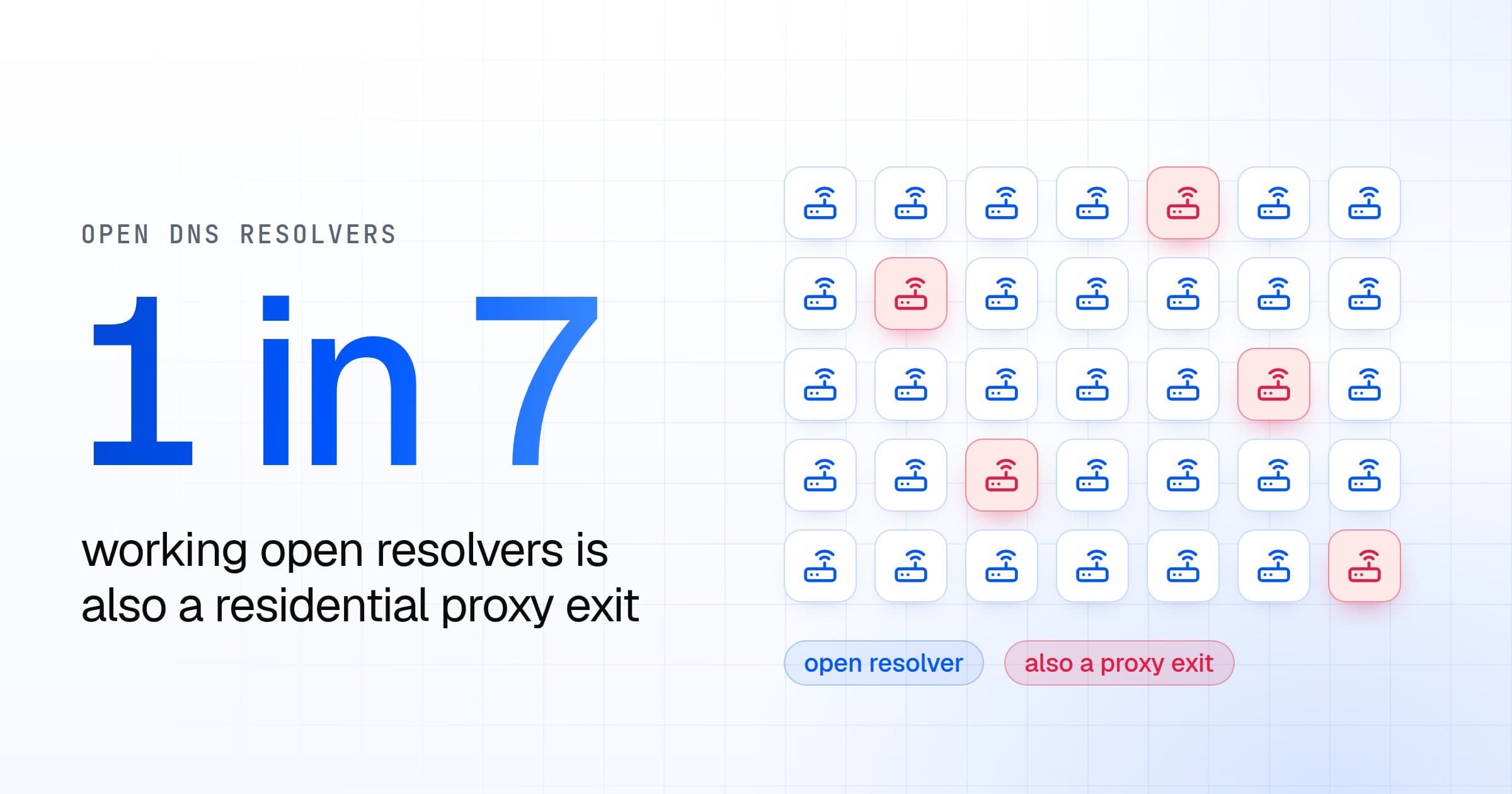

Five more providers are actively contributing IPs (110 now), the master catalog of commercial proxy providers grew to 386, and the Mobile Proxy IP pool climbed 2.4%. The Residential Proxy IP pool edged up to about 141.9 million.
Database at a glance
| Metric | Jun 9 | Jun 25 | Δ |
|---|---|---|---|
| Residential proxy IPs (90d) | 141,395,810 | 141,880,855 | +485,045 (+0.3%) |
| Mobile proxy IPs (90d) | 2,888,257 | 2,957,614 | +69,357 (+2.4%) |
| Active providers contributing IPs (90d) | 105 | 110 | +5 |
| Commercial proxy providers cataloged | 372 | 386 | +14 |
The current 110 active providers break down as 108 residential, 2 mobile, and 6 datacenter providers, with some providers contributing to multiple proxy types.
Inside the residential pool
The IPv4-versus-IPv6 split we walked through in the previous issues held this window; nothing moved more than a point. As of June 25, 48.4% of residential IPs were seen exactly once (28.3% of IPv4, 65.1% of IPv6), 39.0% appeared under more than one provider (61.4% of IPv4, 20.4% of IPv6), and median IPv4 lifetime sat at 4.9 days against IPv6's single day. The durable IPv4 slice is intact: the 75th-percentile address still persists about 38 days, so the weighting we suggested before still applies: treat an IPv4 hit as a lasting signal and an IPv6 hit as ephemeral.
What changed behind the scenes
- New residential providers online. We're onboarding more residential providers as a part of our steady cadence of new-source activation; not a one-off.
- High-coverage residential feeds were hardened. We're improving coverage stability so some providers report consistently for a longer period of time than dropping in and out of the window.
- The master provider catalog grew to 386. Fourteen more commercial proxy providers landed this window through a refreshed discovery flow, in line with the near-complete coverage we flagged last issue; the additions now are mostly newly-introduced providers rather than ones we had missed.