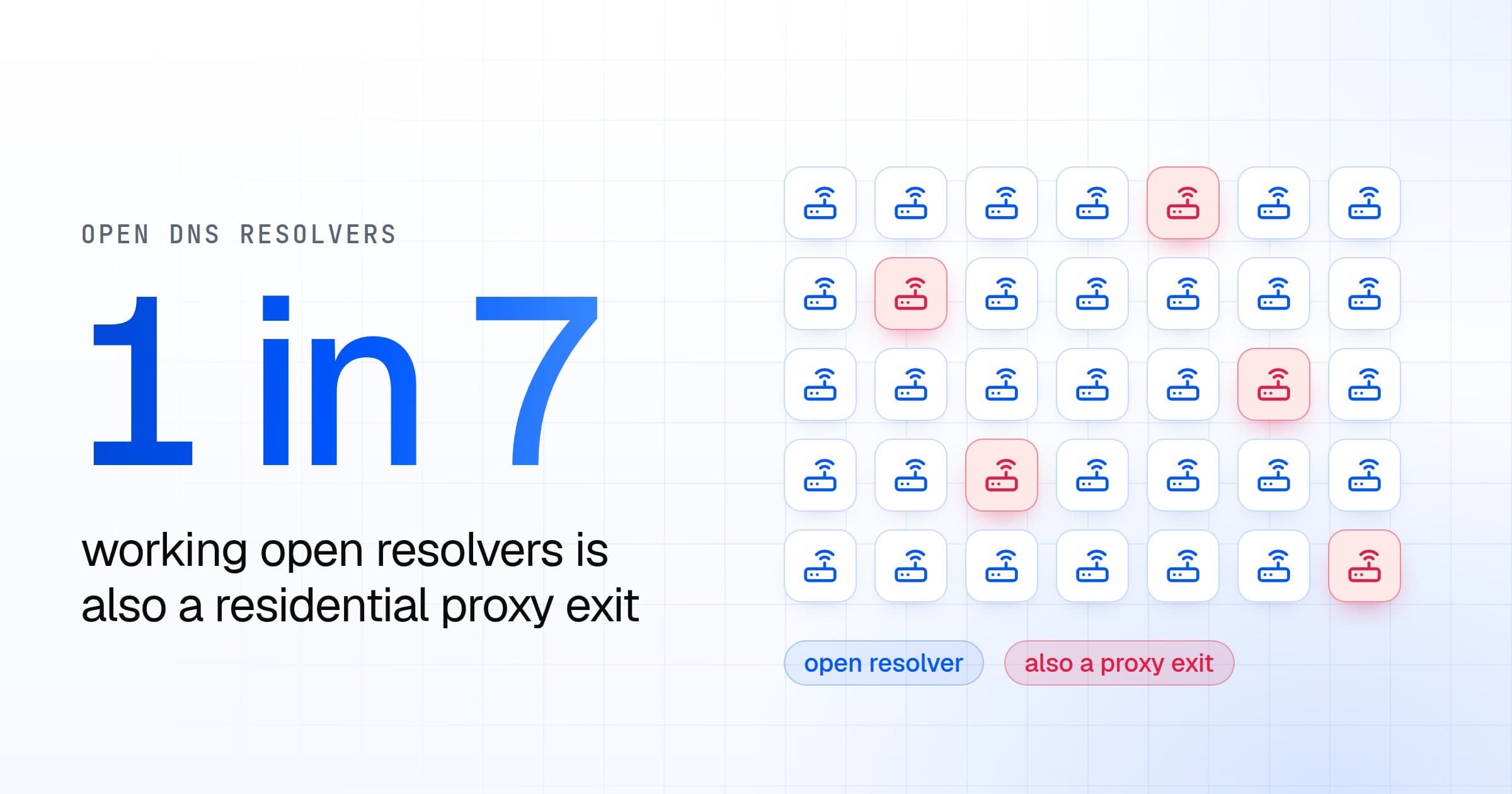

Here's what's changed in the last two weeks across the InternetData Proxy IP databases. Residential Proxy IP coverage grew by 6.2 million IPs to 141.5 million and Mobile Proxy IP climbed 6.7%. All numbers below are from the 90d window, which captures the fullest picture of each pool.
Database at a glance
| Metric | May 27 | Jun 10 | Δ |
|---|---|---|---|
| Residential proxy IPs (90d) | 135,342,070 | 141,539,137 | +6,197,067 (+4.6%) |
| Mobile proxy IPs (90d) | 2,723,651 | 2,906,582 | +182,931 (+6.7%) |
| Active providers contributing IPs (90d) | 105 | 106 | +1 |
| Commercial proxy providers cataloged | 338 | 372 | +34 |
The current 106 break down as 104 residential, 2 mobile, and 6 datacenter feeds, with several providers contributing to more than one category.
Inside the residential pool
These are observations from the residential 90d snapshot as of June 10.
- Nearly half the pool (48.5%) was observed exactly once over 90 days: 28.5% of IPv4 versus 64.4% of IPv6.
- Median lifetime in the pool is 4.8 days for IPv4 and 1.0 day for IPv6. The IPv4 tail is long: the 75th-percentile IPv4 address persists 38.5 days, so a meaningful slice of IPv4 is durable enough to score with confidence, while IPv6 is effectively single-day and should be treated as ephemeral.
- 38.9% of the pool was seen across more than one provider: 60.9% of IPv4 versus 21.3% of IPv6. IPv4 supply is heavily resold, so the same address routinely appears behind multiple commercial brands; IPv6 addresses are far more likely to be unique to a single provider.
What changed behind the scenes
- Mobile and datacenter sourcing expanded. We brought a new commercial source online for both the mobile and datacenter databases this window. More to come.
- Master provider catalog grew. Our automated catalog of commercial proxy providers expanded to 372 entries, and we seem to be hitting a ceiling - it seems all that remains are new providers that get introduced month-to-month.